In our previous article we highlighted how 80% of Italian boat owners are over 50, a figure confirmed by the Osservatorio Nautico Nazionale and by global trends from the NMMA. The data is clear: the boating industry risks aging together with its clients, unless it develops new ways to engage those who are currently left off the radar.
To avoid being anchored to a shrinking market, boatbuilders, dealers, and operators need to communicate differently and expand towards those who can represent the future: young people, women, and Southern Italy.
Here’s a practical guide: three segments, three tailored communication strategies.
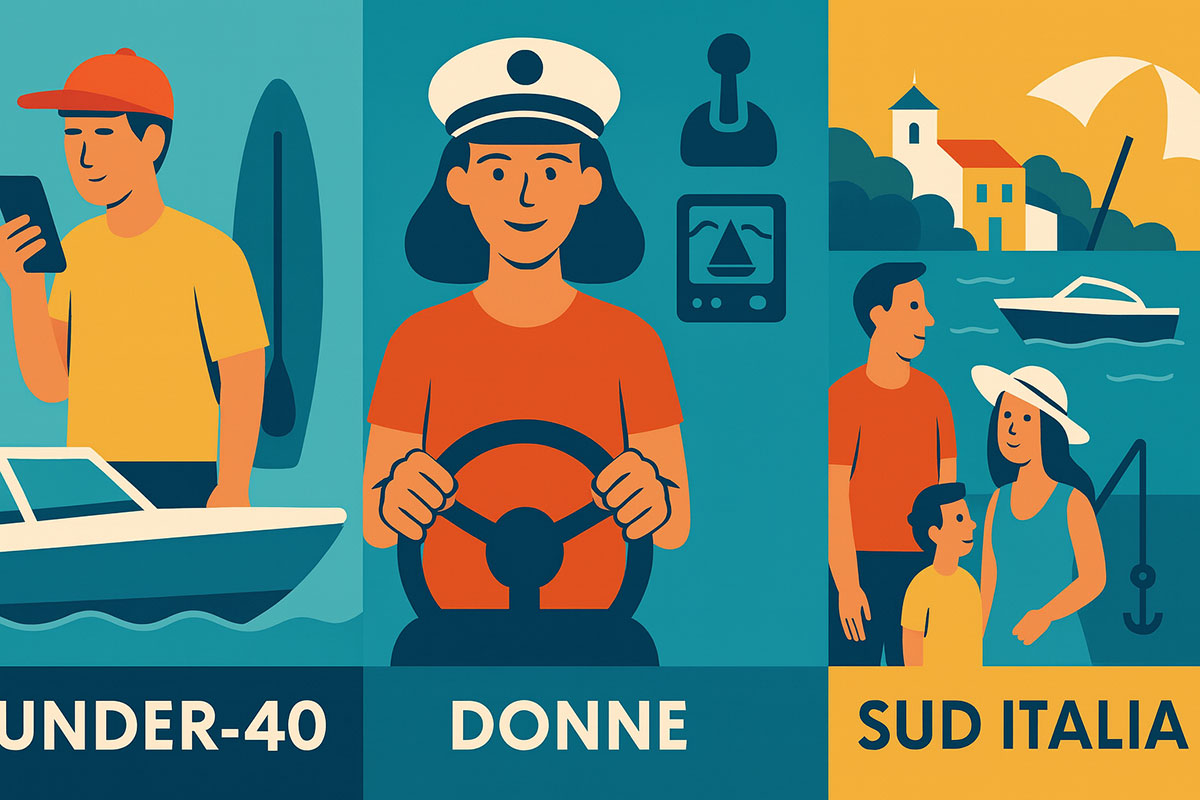
1. Under-40: experience before ownership
What holds them back: boating is still perceived as expensive, complicated, and “something for older people.” Maintenance, berths, insurance, paperwork — it all looks like a burden.
How to communicate:
- Pricing by experience: instead of “this boat costs €150,000,” frame it as “for €600/month you can enjoy 8 weekends at sea.”
- Experiential storytelling: don’t show the boat, show the lifestyle — friends, sport, sunset aperitifs at anchor. This is exactly the strategy behind Axopar, which sold thousands of boats in less than 12 years.
- Channels and language: Instagram, TikTok, YouTube Shorts. Short, visual, accessible.
Sample claim: “Your boat when you need it, no strings attached.”
👉 Internal link: See our article The New Funnel of the Boating Customer, where we explain why today’s decision-making processes are slower but more deliberate.
2. Women: safety, simplicity, and community
What holds them back: the industry still often communicates with a male-oriented tone, falling into stereotypes (“he drives, she sunbathes”). There is also the technical concern of mooring and maneuvering — an issue for both genders, but more heavily stigmatized towards women.
How to communicate:
- Safety & simplicity: joystick maneuvering, docking assist systems, dedicated courses.
- Community: “ladies clinics” in marinas, women skipper ambassadors, leadership stories.
- Inclusive visuals: images with women at the helm, not in the background.
Sample claim: “Confident at the helm, central to your experience.”
👉 External reference: see the initiative Women in Boating, part of the NMMA campaign in the US to increase female participation in boating.
3. Southern Italy: young owners and untapped potential
What defines it: the South already represents 25% of Italian boat owners and is the top region for young owners. The potential is enormous, but still undervalued, partly due to underdeveloped infrastructures. Solutions could include low-impact models such as green harbors or “dry marinas,” perfect for small boating.
How to communicate:
- Strong localization: campaigns featuring Southern ports and marinas, not just the “usual suspects” of Northern boating hubs.
- Start Boating packages: turnkey weekends, light charter or club formulas.
- Local identity and pride: storytelling tied to sea, family, and Mediterranean conviviality.
Sample claim: “The sea close to home, boating as a family experience.”
👉 Internal link: see our upcoming Guide to Marketing Local Events, where we’ll explain why even small demo days or clinics in Southern marinas can make the difference.
Key Takeaways
- Under-40 = experience + flexibility
- Women = safety + inclusivity
- Southern Italy = localization + community
Three different audiences, one common goal: to expand the boating customer base and make boating more accessible and inclusive.
If our article on Over-50s showed the risk of inaction, this one points to the solution: segment your communication, make it targeted, make it contemporary.
At LLiquida, we help shipyards and operators build strategies that speak to new audiences without losing authority with established clients.