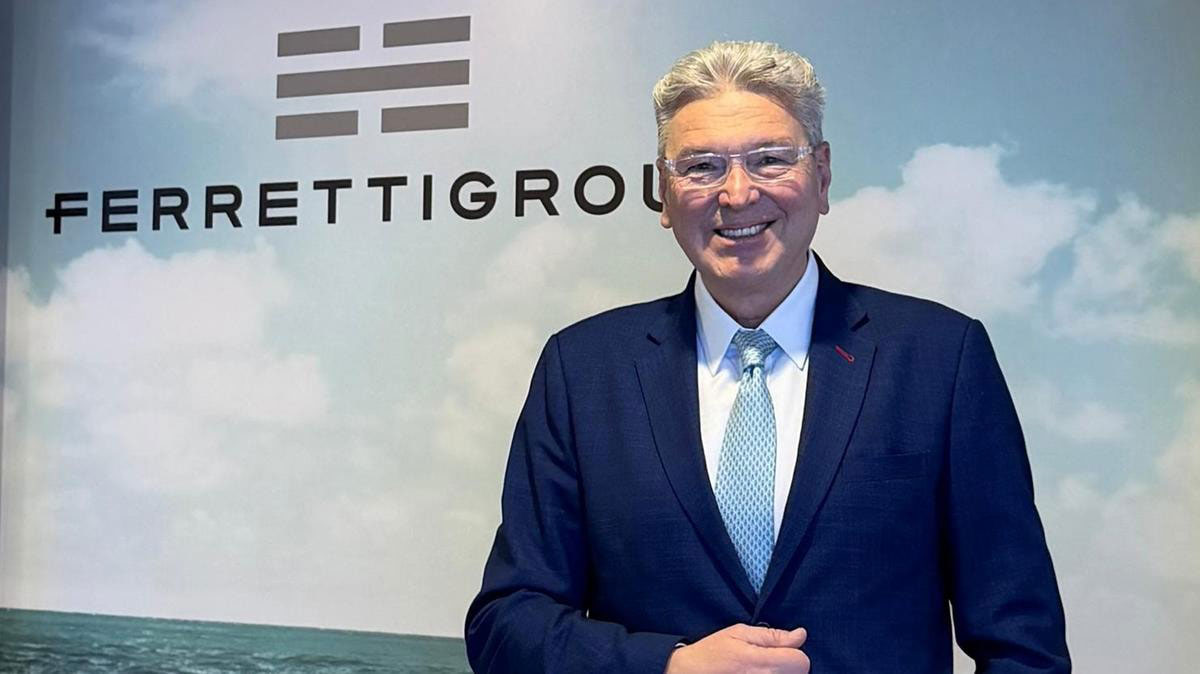
Did you happen to catch the letter that Stassi Anastassov, CEO of Ferretti Group, circulated recently?
It is an outstanding, free masterclass in corporate leadership.
A prime example of how well-crafted executive communication can simultaneously guide an organization, establish management positioning, and speak directly to the market.
Clear, actionable, and inspiring, packed with sharp marketing insights and strategic vision.
The delivery was executed impeccably.
It addresses the internal team first: “Team” is the opening word.
Then it reaches the press, through an informal and strictly curated distribution: Ansa, Borsa Italiana, and a premier industry publication, PressMare, before being picked up by major daily newspapers.
A masterstroke.
What can business leaders learn from this management lesson?
First, how to structure effective communication.
The letter totals 1,352 words: within the first 124 words, the entire strategic framework is already laid out.
Agreement frame: why I am communicating with you right now. The core drivers behind how this company will operate. The objective: what we need to achieve. The path: how we will get there.
Thirteen lines across eight total pages.
Direct and decisive.
The primary takeaway: orient first, dive into details later.
Anastassov accomplishes this through his six “obsessions.”
Six core principles driving tangible actions and concrete outcomes. Six decision-making criteria, far from decorative corporate slogans.
Logical, sharp, and positive, they serve as a valuable blueprint for anyone leading a business.
He outlines expectations across the three pillars upholding any company: people, processes, and marketing.
Anchoring everything: cold, clear numbers.
These obsessions form the practical core of the management message directed at the workforce.
Here they are.
Laid out step by step, each with a focused heading designed to be remembered.
An engaging structure paired with solid, credible substance: capturing attention while generating trust.
First: the corporate equivalent of the first commandment: the client is the boss.
The customer keeps the lights on.
Acquiring new clients is essential; retaining existing ones delivers far superior profitability.
A satisfied owner buys again, acts as your most effective sales advocate, and builds genuine brand equity through word of mouth.
Brand and design: read brand positioning and aligned communication.
The second obsession directly concerns marketing professionals.
No abstract values here: he names the brands individually. Riva. Pershing. Ferretti Yachts. Wally. Custom Line. CRN. Itama.
The strategic takeaway: heritage and market differentiation are expressed through proper nouns rather than generic adjectives.
Noticeably, across all 1,352 words, neither “Made” nor “Italy” appears even once.
Anyone aiming to communicate tradition while feeling compelled to write it every other sentence has a powerful counter-example here.
Point three: money, which remains vital for any business, represents winning – delivering tangible results.
To determine whether performance is durable, sustainable, and capable of generating “superior returns for ALL,” one must look at the numbers: another cornerstone of serious marketing.
The core premise: substance over mere activity.
Innovation: obsession number four.
Embrace advanced technology, provided it delivers concrete operational value rather than tech for its own sake. Alongside that sits internal evolution, fueled by harvesting solid ideas from across company ranks.
The fifth is the most personal obsession: professional pride.
It clarifies why rigorous standards matter for decision-makers and what they mean for the company.
Specifically: how executive management approaches operational execution.
In other words: how work actually gets done.
“To me, execution is not glamorous.
It simply means doing what you said you would do, when you said you would do it, to the standard you promised.
Again and again.
That is how great companies are built.”
Meritocracy (stated three times) marks the final point, establishing that career growth stems from documented performance rather than personal ties.
For an entrepreneur, executive, or team leader, the mandate is clear: know the people working with you, understand their actions, and align with their underlying motivations.
Once the main framework is established, the conclusion follows.
He summarizes the obsessions using terms slightly varied from the headers, reinforcing memory without sounding repetitive.
He concludes with a bold posture: declaring himself open to challenge, fully fallible, and ready to engage with anyone presenting divergent views.
Subject to a single rule: every operational decision will be made strictly through the lens of these six obsessions.
A demonstration of authority grounded in transparency, not weakness.
A stellar move.
Whether Anastassov will ultimately be remembered as a gifted communicator or as the leader delivering outsized results for ALL (capitalized, just as he wrote it) will be determined over time.
As an internal executive document, however, it belongs in advanced management, marketing, and communication curricula.
A personal observation: seeing this entire strategic framework open with a pledge to share the company’s “business DNA” was striking.
Grounding strategy directly in authentic business DNA is the exact foundation we advocate for every client engagement.
To review the full contents of Stassi’s letter – as he signs off at the end – take a look at the comprehensive analysis published by PressMare, which includes the complete transcript.