Word has it that this happened at the Cannes Yachting Festival.
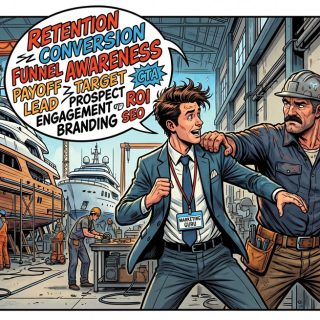
The CEO of one of the most prominent yachting brands climbs over the barriers of a rival shipyard’s booth alongside a photographer. He begins shooting the yacht’s interiors until his counterpart steps in and escorts him away, not particularly gently.
Usually, security steps in for Mr. Canapé sneaking into private parties or the casual visitor trying to sneak aboard to glimpse “the boats of the rich.”
You expect a CEO to receive different treatment. Then again, if you catch him trespassing on your boat…
This is the kind of story that circulates along the docks during informal chats among industry professionals to make sense of what is happening across yachting.
At times, what sounds like mere dockside gossip can reveal a great deal about people, companies, and the current economic landscape.
This is also why a boat show remains one of the cornerstone events for our industry’s commercial activity.
Then there is the practical, immediately measurable side: sales.
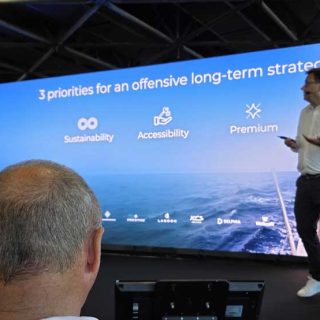
As Bruno Thivoyon, CEO of Groupe Beneteau, pointed out: a boat show works because it brings together shipyards, dealers, yachts, clients, and water.
He stated this during the group’s press conference, which I attended on the opening morning of the Cannes Yachting Festival. The delivery certainly carried the polished ring of a slogan, yet at its core, it holds undeniable truth.
Contracts might rarely be signed directly at the show, yet a major part of the decision-making process unfolds right there.
That moment marks the culmination of a discovery journey with the brand, itself part of a layered and sophisticated communication ecosystem.
Let us start from a simple premise: boat owners are increasingly less competent from a technical standpoint.
They are fully entitled to be, provided they rely on reputable consultants and skilled partners.
Nearly everyone uses a computer and a smartphone: how many people actually understand what sits inside them or what that internal architecture means for overall performance?
Selling a yacht today operates through mechanisms far closer to selling toothpaste than to fishing, to stay with a marine theme.
When I head out fishing, my specific technical expertise and practical knowledge directly increase my chances of returning home satisfied.
Knowing where to go, when to cast, which bait to select, how to rig the line, and how to manage the fight…
When I buy toothpaste, depending on my mood and budget, I pick: what I know best, what feels most relevant to me, what stands right before my eyes, or what costs more or less.
In other words: I buy the brand.
I know virtually nothing about what happens behind the finished product.
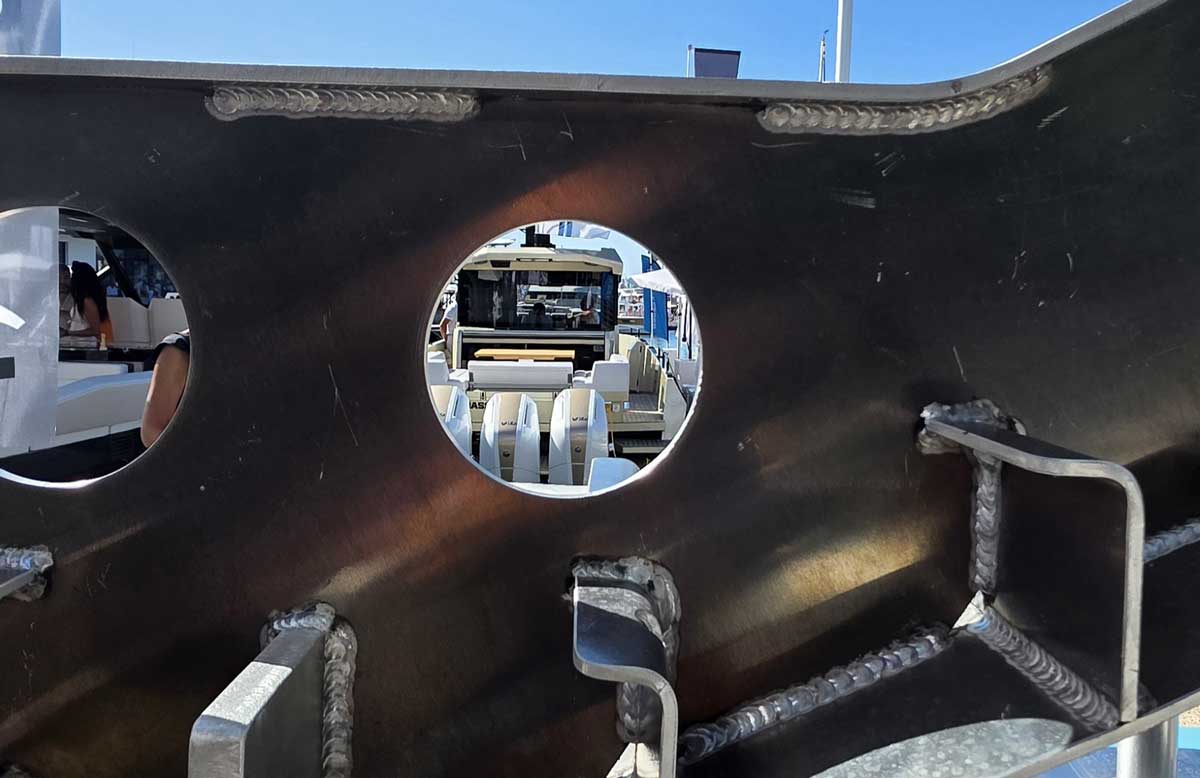
Sometimes, an audacious CEO tries to uncover what lies behind that curtain, photographer in tow, climbing over fences in a rocambolesque entry.
Look at it as the exception that proves the rule.
When it comes to selling, what a brand communicates through dozens of modern channels carries far greater weight than its raw technical specifications.
Engineering must be present, yet the buyer rarely needs to master it for it to drive commercial success.
Perhaps that is precisely why a top executive would risk such an embarrassing scene.
He knows the game hinges on subtle details, and he wants to inspect them personally (though I would have asked for permission first).
Clients often fail to notice those nuances consciously, yet they perceive them instinctively, and those details shape their choices.
That is where the brand does its real work.