Boating has a communication problem.
Better to focus on the message than the product: boats are beautiful, shipyards offer every type of vessel, and prices are more accessible than people believe.
The problem is that we describe the sector as if it were a status symbol, rather than an experience.
Following a quick survey via a LinkedIn post, which asked how to respond to those who consider boating a game for the rich.
The responses were almost unanimous.
It is not a thing for the rich, but that is how it is perceived.
Of course, the majority of participants are active in this sector, and for this reason, the responses are even more interesting.
Because they come from those who are involved, for better or for worse.
Let’s start from a fact: going boating is not necessarily more expensive than playing tennis at a high level, skiing for the entire winter season, or practicing enduro on a motorcycle.
When you say boating to people, what comes to mind?
Superyachts with a line of “Smeraldines” women in bikinis and sarongs looking for opportunities, the “Flavio Briatores” with finance at the gunwale, and the dolce vita with the late BB on a Riva in the French Riviera.
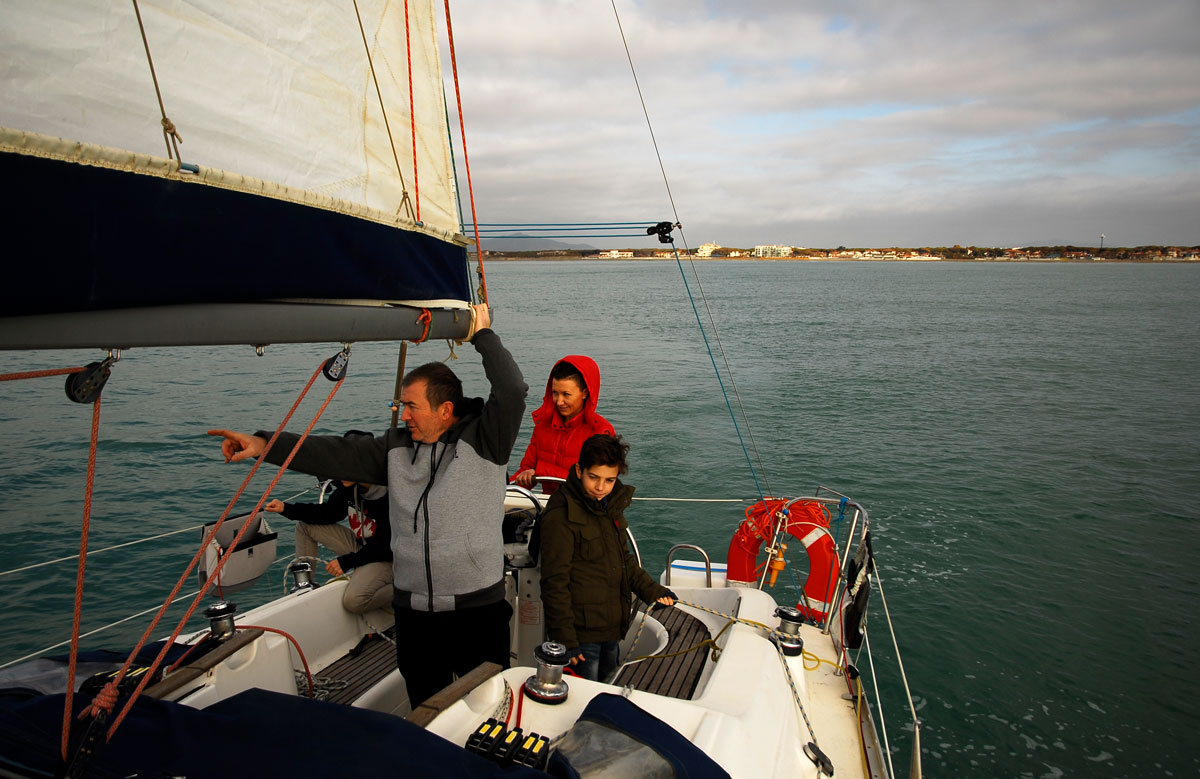
One does not think of a small boat with a 40-horsepower engine, a dinghy at a sailing club, or an old 40-year-old sailing cabin cruiser.
Why?
Here comes the classic: I am responsible for what I say, not for what you understand.
Funny, but it’s an excuse and it’s false.
The one sending the message must be certain that the real content reaches the recipient.
We haven’t worked on it enough, those of us in the sector.
We have described boating as an exception, rather than normality.
We have sold possession, rather than experience. The crampons and ropes, not the climbing. Sinner’s millions, not the emotion of having won Wimbledon.
Okay, every cross we carry has two pieces of wood.
One is external: infrastructural and institutional.
Want to keep a boat in dry storage at a human price? Good luck.
The ports that allow it are only 8 in Italy, out of 350 marinas.
Those that could be born (sustainable and with decent rates) never reach the bureaucratic starting line.
Then there are unclear regulations and overlapping competencies.
Lack of national coordination on tourist port facilities, with fragmented decisions between Regions, Municipalities, and Port Authorities.
And here comes the other piece of wood: how many of these aspects are children of our way of telling our story?
Obviously, we are Italian, and bureaucracy, slowness, and inefficiencies are part of our daily plot.
But as far as we are concerned as actors: how much have we worked, we nautical people, to create a culture of going to sea?
Instead: how many of us have ever written, published, or shouted that a decent cruise costs less than a week of skiing in Cortina?
How many companies have ever thought of a campaign -not an advertisement, a real campaign- where the message was “yes, you can do it”?
Starting from the basics.
Why is it natural to take a child skiing in the mountains in winter, but sending them to sea is strange?
And the primary engines of the nautical market, the companies: how much do they contribute to educating the boater and more generally the NON-boater?
We seem not to realize that the advantage is twofold.
On one hand, the market expands directly.
On the other, we start telling everyone: that a few hundred euros a month are enough to go boating.
An argument that doesn’t necessarily have to interest everyone.
Let’s pretend that the Benettis, Ferrettis, Sanlorenzos, etc., must continue to talk only to the “rich”.
A questionable statement, but let’s take it as a given.
And everyone else?
Those who produce 4-meter boats? Trade associations? Sailing clubs?
Educating requires more time and more commitment than buying a page of advertising.
But how long does the effect of education last compared to advertising?
And to have the same consistency of message, advertising eventually costs more, in terms of effort and investment, than education, which also has the advantage of being self-sustaining.
Today there are a thousand systems to transmit information, to educate, and also to do it in a fun way.
Social media, from Facebook to YouTube, passing through WhatsApp and Telegram channels, newsletters, company websites, and the ever-living magazines.
Or maybe there is another fear?
Educating requires admitting publicly that boating is not a thing for the rich.
It means losing the status symbol that somehow protects us.
This is why advertising wins: it doesn’t expose anyone.
And the market remains as it is: small, exclusive, fragile.
Protected by a narrative that continues to protect only a part of it.
The alternative is to start telling it differently.